Case Study — Fashion & Retail
A rework station for fast fashion garments with defective RFID tags
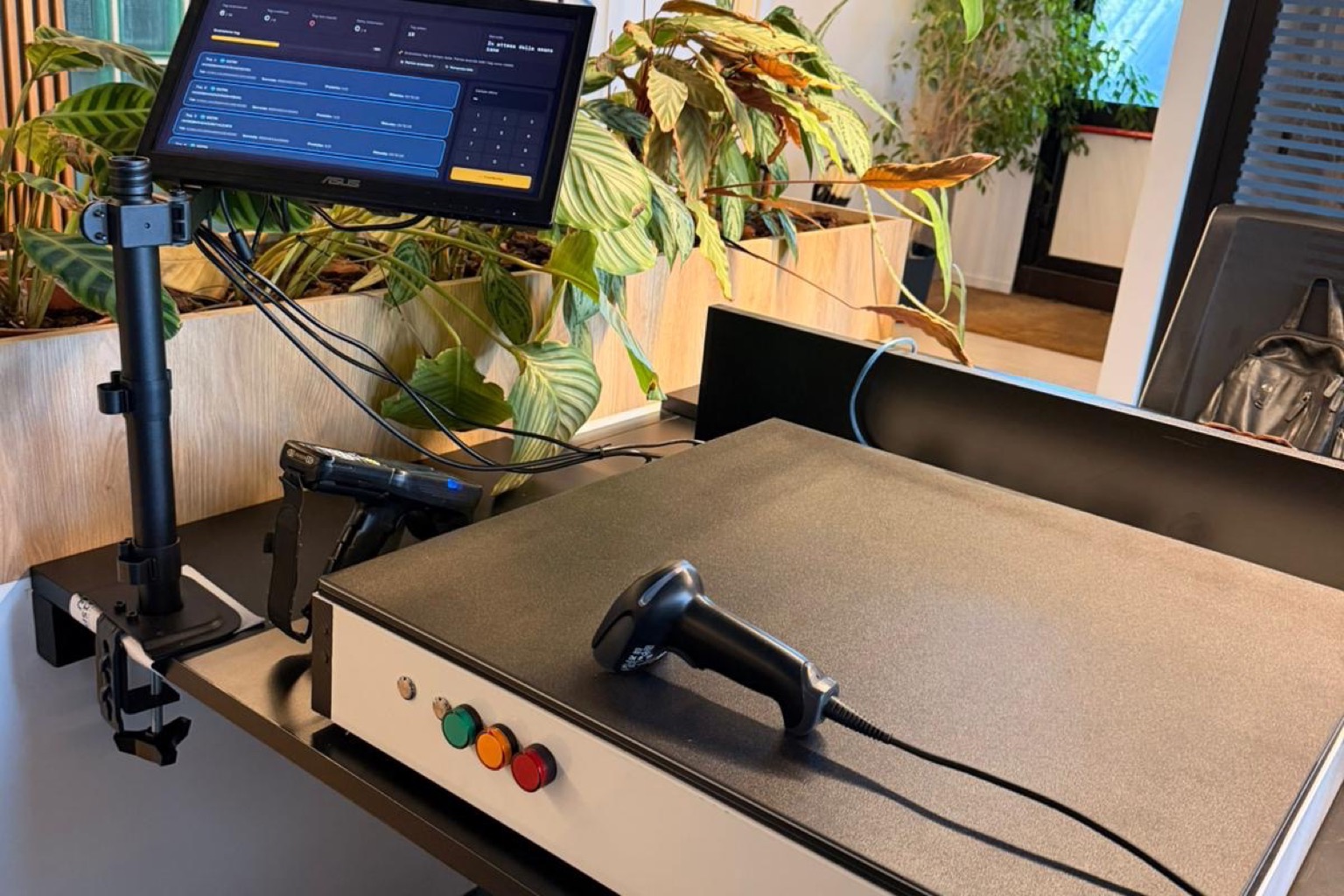
How MC Sistemi built an encoding station to correct systematic tagging errors on incoming cartons — using Device Manager to drive the reader without building the RFID layer from scratch
Fixing tagging errors at the source, one carton at a time.
MC Sistemi's customer, working in logistics, faced a recurring problem: the service bureau and vendors upstream were making systematic tagging errors — RFID tags that arrived either unencoded or encoded incorrectly. Products carrying those tags couldn't move cleanly through the traceability chain, and at volume the problem couldn't be handled case by case. What the customer needed was a way to intercept an affected carton and re-encode everything inside it correctly, on the spot, at warehouse pace. A useful fact made this tractable: the customer works with single-reference cartons — every item in a carton is the same SKU.
How the station works
The operator flow is deliberately simple. Place the carton on the station, declare the expected quantity, and scan the barcode of the product — since the carton is mono-SKU, that single scan defines what every tag inside should contain. From there the system takes over: it reads all the tags in the carton, identifies the ones that are unencoded or carry errors, calculates the required passwords at runtime, overwrites every tag, and corrects the errors — in one pass, with no per-item handling by the operator.
Who built what
MC Sistemi supplied the hardware: the physical station with its integrated reader, built for the warehouse floor. The software underneath came from ACD. Device Manager handles communication with the reader, and ACD's encoding application — which drives the hardware through Device Manager — performs the read, verification, runtime password calculation, and tag overwrite. MC Sistemi didn't have to build any of the low-level RFID or encoding logic itself.
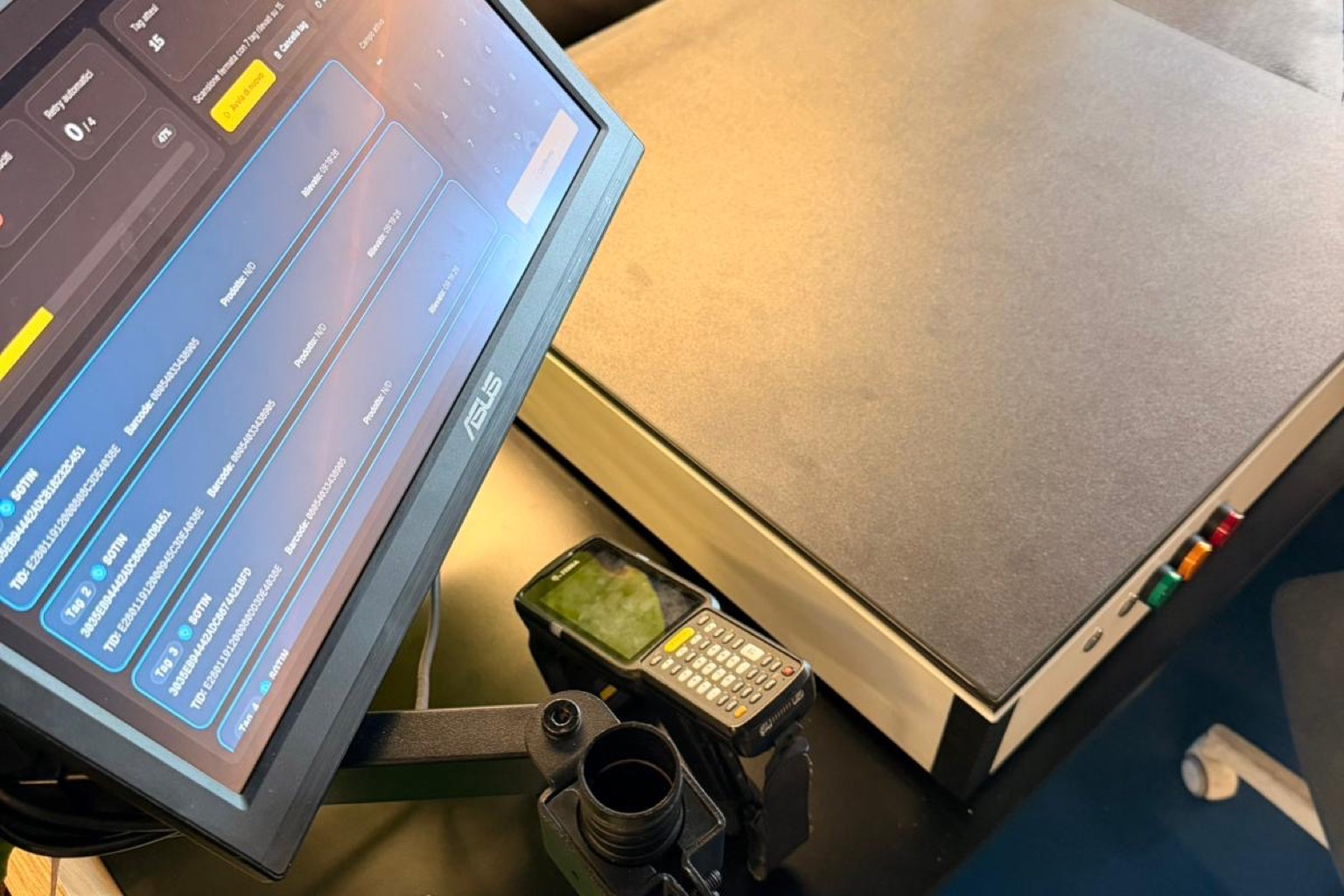
"The reader part was the easy bit. The hard part was the encoding logic underneath — that's not something we wanted to build from scratch."
Michele Celone
CEO — MC Sistemi
Errors corrected at the point of handling.
The result is a station that resolves tagging problems where they surface, without scrapping stock or routing cartons back to the vendor. Because the carton is single-reference and the product barcode defines the target encoding, a whole carton is verified and re-encoded in a single operator interaction. The heavy lifting — reading, diagnosing, calculating passwords, overwriting — happens automatically, and the station keeps pace with warehouse operations.
MC Sistemi collaboration
Designed and supplied the physical encoding station with its integrated reader, built for the warehouse floor, and knows the logistics processes it drops into.
ACD provided the software stack
Device Manager for reader communication, plus the encoding application that drives the hardware through it — read, error detection, runtime password calculation, and tag overwrite.
This is the typical ACD collaboration pattern: the customer builds the hardware it knows how to build, and ACD provides the software and the RFID expertise that take years to master. Neither team had to step outside its competence. Neither team had to start from scratch.
Single scan
One product barcode defines the correct encoding for every tag in a mono-SKU carton
Full carton, one pass
All tags read, verified, and overwritten in a single operator interaction
Zero RFID code
MC Sistemi wrote none of the encoding logic — Device Manager and ACD's application handled it entirely